Last Updated
July 28, 2025
Email
 Painless Civilization 1 (2021) Painless Civilization 1 (2021)
>> PDF

Confessions of a Frigid Man: A Philosopher’s Journey into the Hidden Layers of Men’s Sexuality (2017)
>> PDF
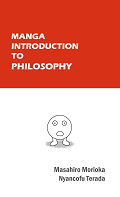
Manga Introduction to Philosophy: An Exploration of Time, Existence, the Self, and the Meaning of Life (2021)
>> PDF

What Is Antinatalism? And Other Essays: Philosophy of Life in Contemporary Society Second Edition (2024)
>> PDF

How to Live in a Post-Religious Age: Terrorism, Philosophy, and the Meaning of Life (2025)
>> PDF
|
About This Site
Lifestudies.Org is a website run by Masahiro Morioka, a professor of philosophy and ethics at Waseda University and the editor-in-chief of Journal of Philosophy of Life. He proposes new philosophical disciplines: philosophy of life and life studies.
>> Detailed information about Masahiro Morioka
>> Further information about this site
Philosophy of Life and Life Studies
Philosophy of life is an academic discipline that deals with philosophical issues surrounding life, death, and nature. Life studies is a research methodology that can only be accomplished by "never detaching oneself from the subject being investigated".
>> Detailed explanation about philosophy of life and life studies
Books
List of books
Recent English Books
 |
Masahiro Morioka
How to Live in a Post-Religious Age: Terrorism, Philosophy, and the Meaning of Life (1996, 2025 Open Access) |
| |
|
 |
Masahiro Morioka
Painless Civilization 2: Painless Stream and the Fate of Love (2003, 2023 Open Access)
Chapters Two and Three of Painless Civilization |
| |
|
 |
Masahiro Morioka
What Is Antinatalism? And Other Essays: Philosophy of Life in Contemporary Society Second Edition (2024 Open Access) |
| |
|
 |
Masahiro Morioka
Painless Civilization 1 (2003, 2021 Open Access)
Chapter One of Painless Civilization
|
| |
|
 |
Masahiro Morioka, Nyancofu Terada
Manga Introduction to Philosophy: An Exploration of Time, Existence, the Self, and the Meaning of Life (2013, 2021 Open Access) |
 |
|
 |
Masahiro Morioka
Confessions of a Frigid Man: A Philosopher’s Journey into the Hidden Layers of Men’s Sexuality (2005, 2013, 2017 Open Access) |
|
|
 |
Masahiro Morioka
Brain-Dead Person: Human Relationship–Oriented Analysis of Brain Death (1989, 2000 Open Access) |
| |
|
 |
Masahiro Morioka (ed.)
Artificial Intelligence, Robots, and Philosophy (2023 Open Access)
|
Books Recently Translated into Other Languages
Recent Japanese Books (Incomplete)
Papers and Essays
List of papers and essays
> Recently uploaded English articles
A Phenomenological Approach to the Philosophy of Meaning in Life (2025)
In this paper I introduce two phenomenological ideas, affordance and enaction, to the philosophical discussion of meaning in life. This is quite possibly the first attempt in the world to integrate them. Published in Philosophia.
Masahiro Morioka, the Philosopher and the Secret of the “Small Happiness” That Saves Us from Suffering (2025)
Interview by Costanza Rizzacasa d'Orsogna, which appeared in CORRIERE DELLA SERA 7.
The Sense of Someone Appearing There: A Philosophical Investigation into Other Minds, Deceased People, and Animated Persona (2023)
In this paper, I employ examples from previous studies, my own experiences, and thought experiments to conduct a philosophical analysis of the mechanism of the emergence of an animated persona. Published in Human Studies.
Painless Civilization and the Fate of Humanity: A Philosophical Investigation (2023)
In a painless civilization, we are deprived of the joy of life, which is considered a fundamental source of meaning in life, and we are led toward the situation of drowning in a sea of pleasure. This is a kind of dystopia, and we cannot find an easy way to escape from it. A concise and to-the-point description of chapters 1-3 of the book Painless Civilization.
Artificial Intelligence and Contemporary Philosophy: Heidegger, Jonas, and Slime Mold (2023)
In this paper, I provide an overview of today’s philosophical approaches to the problem of “intelligence” in the field of artificial intelligence by examining several important papers on phenomenology and the philosophy of biology.
The Dark Side of Painless Civilization: A Philosophical Investigation into Human Desire (2022)
In a painless civilization, we are deprived of the joy of life, which is considered a fundamental source of our meaning of life, and we are led to the situation of drowning in a sea of pleasure.
Hermitism and Impermanence: A Response to Nagasawa’s Argument on Transcendentalism in Medieval Japan (2022)
Kamo Chōmei lived in a small house in the remote mountains and interacted with the surrounding nature. His lifestyle is considered a good example of reconciling one’s finite life with the impermanence of the world and human sufferings.
Is It Possible to Say ‘Yes’ to Traumatic Experiences?: A Philosophical Approach to Human Suffering (2022)
People who have encountered a tragic event and suffered from traumatic experiences can sometimes achieve, in their later lives, an affirmation of having been born to such devastating lives. But what does this “affirmation” exactly mean in such cases? In this paper, I investigate this problem from the viewpoint of philosophy of life’s meaning.
What Does Doing Philosophy Mean to Me? (2022)
An English translation of a slightly modified version of my Japanese essay of the same title.
The Concept of Painless Civilization and the Philosophy of Biological Evolution:
With Reference to Jonas, Freud, and Bataille (2022)
A philosophical investigation into the relationship between painless civilization and biological evolution.
The Cruelty of Living in a Painless Civilization (Interview, 2022)
An interview with Masahiro Morioka about painless civilization.
Pleasure, Suffering, and Painless Civilization (Interview, 2022)
Beyza Şen and Ali Tacar's interview with Masahiro Morioka on painless civilization and his recent works.
Animated Persona: The Ontological Status of a Deceased Person Who Continues to Appear in This World (2021)
In this paper, I propose the concept of the “animated persona,” a soundless voice that says “I am here” and appears on the surface of someone or something. This concept can bring clarity to the experience of perceiving a kind of personhood on a corpse, a wooden mask, or even a tree.
Can Artificial Intelligence Philosophize? (2021)
A short essay that discusses whether it is possible for AI to do philosophy in its true sense of the word.
What Is Birth Affirmation?: The Meaning of Saying “Yes” to Having Been Born (2021)
This
is an outline of the concept of "birth affirmation", which means the state of mind in which I can say from the bottom of my heart that I am truly glad that I have been born. In short, it means to be able to say “Yes” to my having been born.
What Is Antinatalism?: Definition, History, and Categories (2021)
Antinatalism is the thought that all human beings or all sentient beings should not be born. In this paper, I briefly summarize the history of antinatalistic thoughts and propose a set of categories on antinatalism and related thoughts.
A Solipsistic and Affirmation-Based Approach to Meaning in Life (2019)
In this paper, I make two arguments: 1) There is a solipsistic layer in meaning in life, and 2) the heart of meaning in life can be dynamically incorporated into the affirmation of having been born into this world, which I call “birth affirmation.”
Philosophy, Manga, and Ōmori Shōzō (2018)
An examination of Morioka's Manga Introduction to Philosophy and Ōmori Shōzō's philosophical writings. With Pierre Bonneels.
The Trolley Problem and the Dropping of Atomic Bombs (2017)
In this paper, I show that the dropping of atomic bombs was a typical example of the events that contained the logic of the trolley problems in their decision-making processes and justifications, and secondly, I discuss five aspects of “the problem of the trolley problem".
The Review of Life Studies
A collection of articles written by Masahiro Morioka and his friends.
Audio
> Recently uploaded Audios
What Is the Animated Persona, and What Is Its Relationship to Robots, AI, and Deceased People?
An AI Dialogue on Masahiro Morioka's Paper, "The Sense of Someone Appearing There: A Philosophical Investigation into Other Minds, Deceased People, and Animated Persona" 2025
Video
List of videos
> Recently uploaded Videos
Painless Civilization: A Philosophical Investigation into Human Desire
A Common Horizon for Humanity and the Planet, Cappadocia University, recorded on August 29, 2022.
Manga Introduction to Philosophy; Life, Death, Time, and the Meaning of Life
The Dissenter #643, recorded on April 4, aired in June, 2022.
Animated persona and the existence of dead persons
Grief: A Study of Human Emotional Experience, May 12, 2022.
[Tokyo Philosophy Project 04] Iddo Landau talks about "philosophy of life's meaning" with Masahiro Morioka
Recorded on February 25, 2022.
A Traumatic Rupture in Life and the Affirmation of Having Been Born
Masahiro Morioka's YouTube Channel, February 12, 2022.
Is Birth Negation Held by Atheistic Antinatalists a Kind of Religious Belief?
Masahiro Morioka's YouTube Channel, June 27, 2021.
The Exploring Antinatalism Podcast #28 - Masahiro Morioka
Aired on February 2, 2021.
What Is Birth Affirmation? The Meaning of Saying ‘Yes’ to Having Been Born
Third International Conference on Philosophy and Meaning in Life, University of Birmingham, July 23, 2020 (online).
[Tokyo Philosophy Project 03] Rivka Weinberg talks about "philosophy of procreation " with Masahiro Morioka
Recorded on October 6, 2019.
Tokyo Philosophy Project (YouTube)
Masahiro Morioka's YouTube Channel
Academic Journal
Journal of Philosophy of Life
A peer-reviewed academic journal specializing in the philosophy of life, death, and nature, supported by the the Waseda Institute of Life and Death Studies, Waseda University.
Research Project
Tokyo Philosophy Project
A research project supported by the Waseda Institute of Life and Death Studies, Waseda University.
SNSs
 Facebook - Masahiro Morioka Facebook - Masahiro Morioka
 twitter - masa_morioka
 Philpapers - masahiro-morioka Philpapers - masahiro-morioka
 Academia.edu Academia.edu
 ResearchGate ResearchGate
Email
Email
Special Reports
Special Report: No.1
Brain Death and Transplantation in Japan
Special Report: No.2
Japanese Responses to the World Trade Center Attack
Special Report: No.3
Bioethics around the World
Special Report: No.4
Herbivore Men
Other pages
Japanese website 
Japanese version of LIFESTUDIES.ORG.
French website 
French version of LIFESTUDIES.ORG.
Links
List of websites made more than 10 years ago.
Older pages
(c) LIFESTUDIES.ORG 1999 -
|