
 |

|
Books
English Books
 |
How to Live in a Post-Religious Age: Terrorism, Philosophy, and the Meaning of Life (1996, 2025) Open Access Book
The translation of a 1996 Japanese bestseller that addresses terrorism from the viewpoints of philosophy and the meaning of life. I do not believe in a religion, but I cannot acquire the meaning of life through science. How can I live in a post-religious age? The first volume of the life studies trilogy.
|
 |
What Is Antinatalism? And Other Essays: Philosophy of Life in Contemporary Society Second Edition (2024) Open Access Book
A collection of essays on the philosophy of life’s meaning in contemporary society. Topics range from antinatalism, meaning of life, the trolley problem, to painless civilization. The second edition has been published.
|
 |
Painless Civilization 1 (2003, 2021) Open Access Book
Chapter One of Painless Civilization, Morioka's most controversial book to date. The endless tendency to eliminate pain and suffering makes us totally lose sight of the meaning of life that is indispensable to human beings. How are we to battle against this painless civilization?
|
 |
Painless Civilization 2: Painless Stream and the Fate of Love (2003, 2023) Open Access Book
In this volume, I examine the problems of painless civilization from the perspective of philosophical psychology and ethics. I discuss how the essence of love is transformed in a society moving toward painlessness and how the painless stream penetrates each of us and makes us living corpses.
|
 |
Confessions of a Frigid Man: A Philosopher’s Journey into the Hidden Layers of Men’s Sexuality (2005, 2013, 2017) Open Access Book
A book on men's sexuality, especially men's sexual frigidity, their rejection of their own bodies, and their attraction to young girls in their early teens and school uniforms. This book has provoked a variety of emotional reactions from readers, scholars, and the mass media. One of the most important books in Japanese men's studies.
|
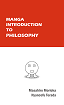 |
Manga Introduction to Philosophy: An Exploration of Time, Existence, the Self, and the Meaning of Life (2013, 2021) Open Access Book
This is perhaps the world’s first book in which a philosopher himself illustrates his own philosophical investigation into hard problems on time, being, solipsism, and life, in the form of “Manga.”
|
 |
Brain-Dead Person: Human relationship–oriented Analysis of Brain Death (1989, 2000)
Translations of some chapters are available
This is a book that helped shift the Japanese discussion on brain death from "brain-centered analysis" to "human relationship oriented analysis." Brain death is redefined in terms of the human relationships between a comatose patient and the people surrounding him/her.
|
 |
Masahiro Morioka (ed.)
Artificial Intelligence, Robots, and Philosophy (2023) Open Access Book
|
 |
Masahiro Morioka (ed.)
Philosophy and Meaning in Life Vol.4: Selected Papers from the Pretoria Conference (2022) Open Access Book |
 |
Masahiro Morioka (ed.)
Philosophy and Meaning in Life Vol.3 (2021) Open Access Book |
 |
Masahiro Morioka (ed.)
Philosophy and Meaning in Life Vol.2: Interdisciplinary Approaches (2020) Open Access Book |
 |
Masahiro Morioka (ed.)
Philosophy and Meaning in Life Vol.1: International Perspectives (2019) Open Access Book |
 |
Masahiro Morioka (ed.)
Nihilism and the Meaning of Life: A Philosophical Dialogue with James Tartaglia (2017) Open Access Book |
 |
Masahiro Morioka (ed.)
Reconsidering Meaning in Life: A Philosophical Dialogue with Thaddeus Metz (2015) Open Access Book
A symposium by 14 phiosophers on Thaddeus Metz's book Meaning in Life (Oxford University Press, 2013).
|
Books Translated into Other languages (Incomplete)
Japanese Books (Incomplete)
 |
Philosophising Life Counseling (2022)
A meta-philosophical examination of a series of life counseling essays that I wrote for Asahi Newspaper.
|
 |
Would It Be Better Never to Have Been Born? (2020)
An academic book that discusses anti-natalistic thoughts from Ancient Greece and Ancient India to the 21st century and tries to find a way to overcome them through the concept of birth affirmation.
|
 |
The 33rd Stone: A Philosophy for a Wounded Age (2009)
A collection of essays on suicide, restorative justice, religion, nationalism, sexuality, and other topics. Together these works address pain and hope in our wounded society. The title comes from the chapter on the incident which occurred at Virginia Tech in 2007. This collection serves as a good introduction to Morioka's thought.
|
 |
Connecting the Living and the Deceased (2012)
A collection of philosophical essays written in 2010-2012. Two essays in this book are going to be reprinted in Japanese high school textbooks. (This page is under construction)
|
 |
Reconsidering the View of Life: From Ecology to Brain Death (1994)
An introductory book on life studies, particularly environmental philosophy and brain death. (This page is under construction)
|
 |
An Intellectual Method of Facing Oneself (1997, 2001, 2006 )
A collection of essays published in newspapers, magazines, and journals. Topics discussed include freedom, sexuality, death, aging, education, love affairs, history, etc. (This page is under construction)
|
 |
Life Studies for Beginners: A Philosophy for Facing Oneself (2005)
This book contains introductory lectures on spiritual care for terminally ill patients, the relationship between parents and children, conditional love, a painless civilization, feminism, eugenic thought, disability, and other topics.
|
 |
Consciousness Communication: The Birth of a Dream Navigator (1993, 2002)
A work, published in 1993 before the advent of the commercial Internet and portable phones, that anticipated today's chaotic cyber-society, employing such terms as "community of anonymity," "consciousness interaction field," "consciousness communication," and "dream navigator." (Winner of the Telecom Social Science Award)
|
 |
A Philosophical Inquiry into Personhood, Dignity, and Brain Death (2015, Kindle)
Masahiro Morioka's Ph.D. thesis.
|
 |
Life Studies Approaches to Bioethics: A New Perspective on Brain Death, Feminism, and Disability (2001)
This book describes a new way of thinking about bioethical issues: a life studies approach. Original concepts such as "the fundamental sense of security","the reality of a deeply shaken self", "men's bioethics," and "the advent of an absent being" are introduced and discussed.
|
 |
An Invitation to the Study of Life: Beyond Bioethics (1988)
Morioka's first book. I argued that environmental issues and medical issues are closely connected with each other and hence should be discussed simultaneously. (This page is under construction)
|
 |
A Philosophy of Fatalism (2019)
Philosophical dialogue with Motoyoshi Irifuji on fatalism and atuality. The fisrt volume of Contemporary Philosophy Lab. series. (This page is under construction)
|
 |
A Study of Interdependence (1994)
The report of an interdisciplinary joint research study on the coming "aging society." A book Morioka co-authored with other study participants. (This page is under construction)
|
|
Life Torn Apart (1995-1998, 2001)
An analysis of "the nature of connectedness (with all living things)", "the nature of self-interest", and "the nature of mutual support", which are deeply engraved onto human life. (This page is under construction)
|
 |
Lessons in Love for Herbivore Men (2008)
A how-to book on love for gentle, inexperienced young men. The term "herbivore men" became a buzzword in the Japanese mass media and was reported worldwide. This book also serves as a practical introduction to gender studies for young people.
|
 |
Herbivore Men will Bring Your Last Love (2009)
A how-to guide for women who want to go out with herbivore men. Chapter 2, which features four dialogues between the author and actual herbivore men, is particularly noteworthy. A sociological analysis of this phenomenon is also included.
|
 |
Brain and Life: A dialogue (1995, 2003)
A dialogue with anatomist Takeshi Yoro. Professor Yoro is a well known scholar whose book, The Wall of Fools, has sold more than 3 million copies. (This page is under construction. Publisher's page)
|
 |
How Does Contemporary Civilization Transform Human Life? (1999)
A collection of dialogues with five distinguished scholars and teachers. Original dialogues were aired on NHK Educational TV. (This page is under construction)
|
 |
Can Men Save the World? (1995)
A dialogue with Shoichi Inoue, historian. We talked about feminism, men's studies, and sexuality. (This page is under construction)
|
|
Cyber Social Welfare (1994)
A collection of dialogues with five young scholars. The topic was cyber-space technology and social welfare. (This page is under construction)
|
|
Book Reviews as a Pleasurable Experience (2002)
A collection of book reviews published in newspapers and magazines from 1986 to 2001. (This page is under construction)
|
List of Books on the Japanese Website
You can read more detailed information about Morioka's books in Japanese.
|